



% better payment
Documented ✔
CleverCoffee
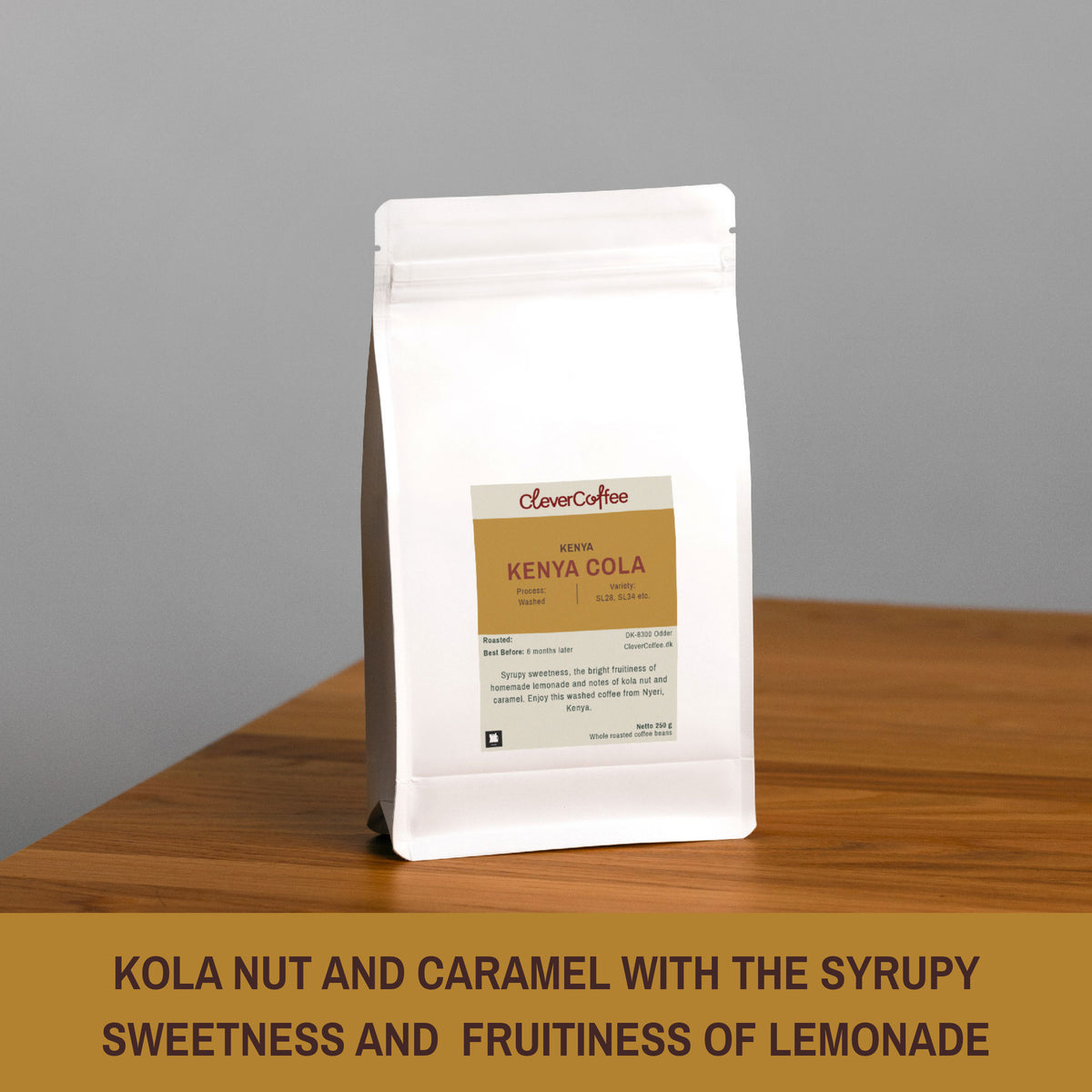
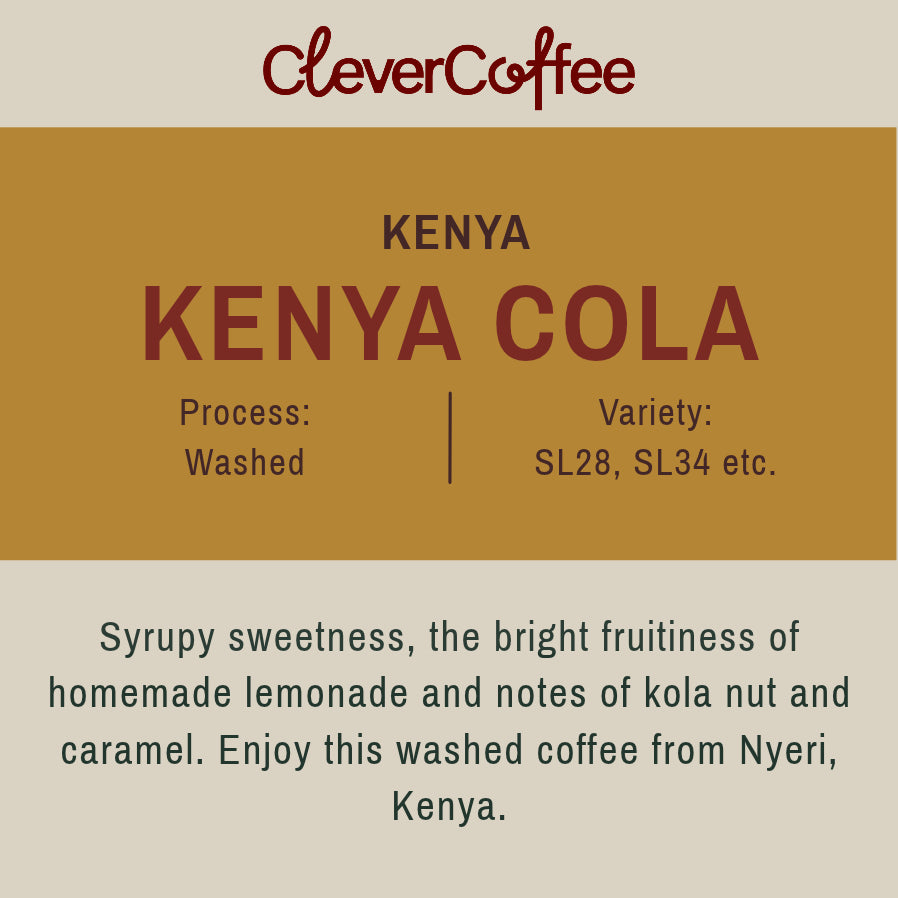
Kenya Cola
Coffee that tastes like cola?
Yes, it’s true.
Kenya Cola is a washed coffee from Nyeri, Kenya. It reminds us of homemade lemonade, with a syrupy sweetness.
And the cola? You’ll find that in the notes of kola nut and caramel.
- Origin: Kenya
- Processing: Washed
- Tasting notes: Sweet lemonade, kola nut, and caramel
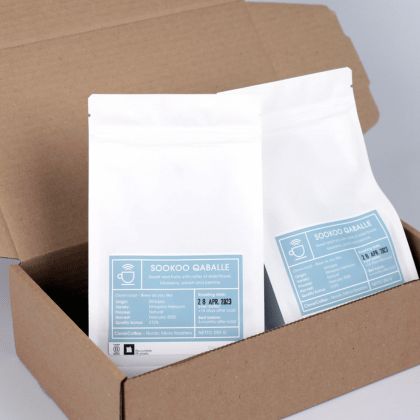
Omni-roasted coffee beans - brew any way you like
Title:250 g
Quantity:
Typical delivery: 1-2 business days4.8 ★★★★★ on TrustpilotPay with MobilepayExceptionally Good Customer Service


Supply chain
Documented ✔

Agroforestry
Read more ✔
We paid the coffee farmer 110% more for this coffee
We pay the coffee farmer more for the coffee than the market price.
Research shows time and again that certifications such as Fairtrade and Rainforest Alliance have no demonstrable positive effect on coffee farmers' living conditions. (Cordes and Sagan, 2021)
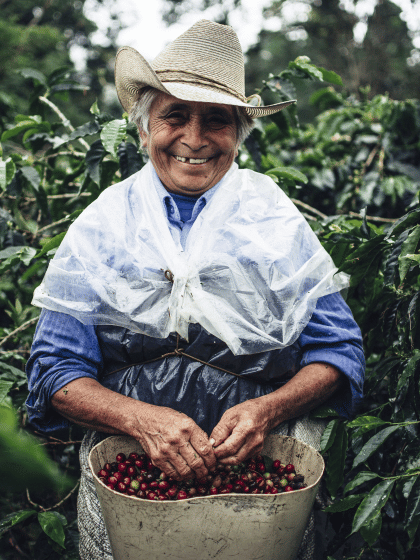
Western coffee companies earn large sums, while coffee farmers around the world live in poverty. This is wrong, and we must change it.
Therefore, we pay more for the coffee beans we import.
44% of coffee farmers around the world still live in poverty. At least 5.5 million coffee farmers live below the international poverty line of $3.20 a day. Studies show that a third of coffee farmers earn less than $100 annually from coffee production (Enveritas, 2018; Sachs et al., 2019).
When we pay the farmers more, we enable them to invest in themselves and their businesses. This can lead to further growth and the opportunity to invest in their farming practices and projects such as reducing water consumption and reforestation.
The calculation:
We paid $11.32/kg (FOB) for this coffee.
The market price at the time of the contract was $5.38/kg.
This means that we paid 110.4% above the market price.
Documentation
See the complete overview of the payments we have made for our coffee beans in our annual transparency report: CleverCoffee: Transparency Report
Sources
"Responsible Coffee Sourcing: Towards a Living Income for Producers" (Cordes and Sagan, 2021)
"Why do coffee farmers stay poor? : Breaking vicious circles with direct payments from profit sharing" (Ruben, 2023)
"Six Transformations to Achieve the Sustainable Development Goals (SDGs)" (Sachs et al., 2019)
A short and transparent supply chain
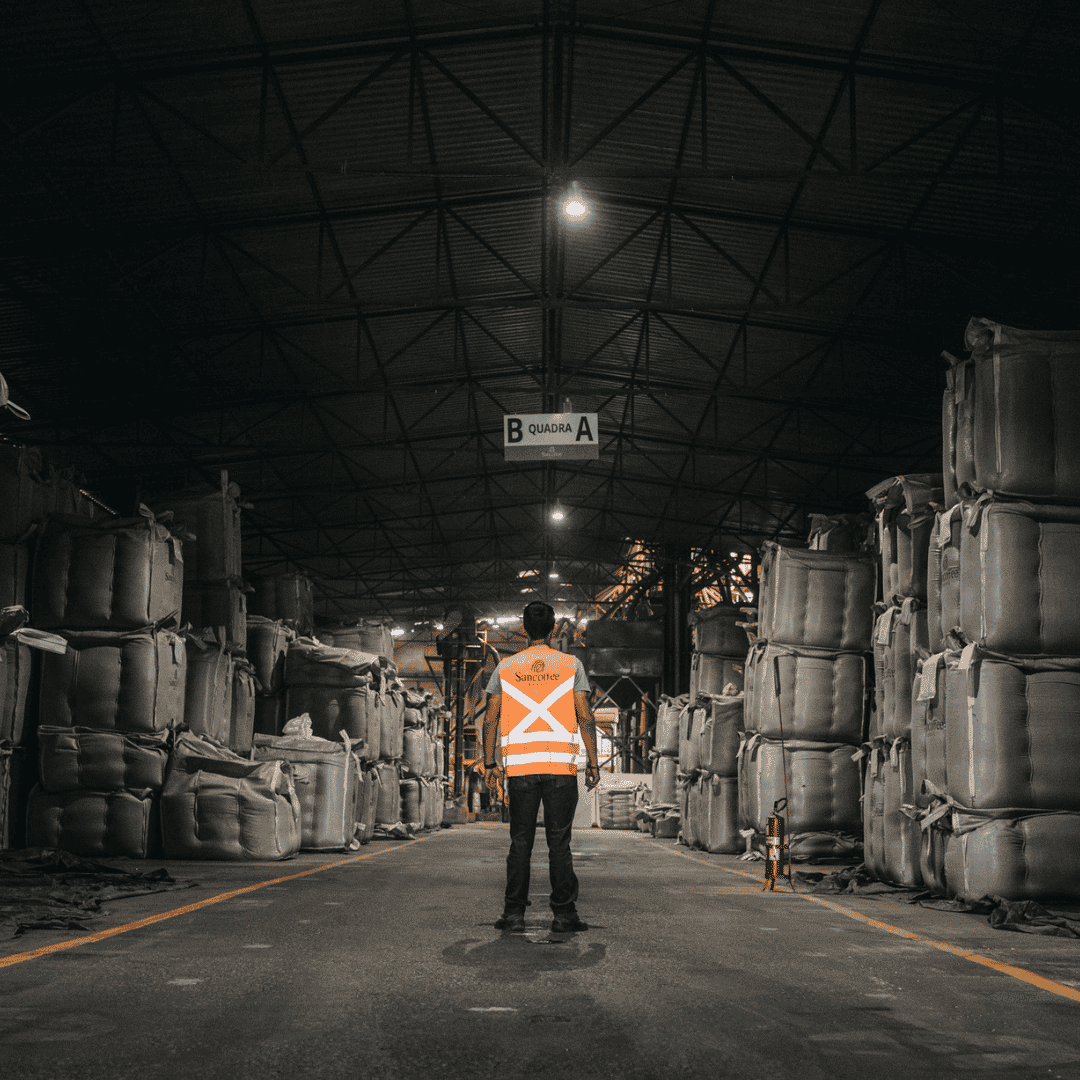
We always work with a supply chain that is as short and transparent as possible. In 2025, 93.58% of our coffee was purchased directly from the coffee farm, meaning no middleman was used.
This coffee is an exception, as we used a transparent importer to bring the coffee home.
The vast majority of our roasted coffee is also purchased directly from us—with a few retailers being the exception, such as coffee bars and specialty stores. You cannot buy our coffee at any major chains or online marketplaces.
This means there are fewer parties that need to “have a piece of the pie,” and we can offer better pay to the coffee farms, which have been underpaid and lived in poverty for decades.
The supply chain for this coffee looks like this:
- The coffee was grown in the Nyeri region of Kenya.
- The coffee cherries were processed locally in Gachatha.
- The green coffee beans were imported to Europe by Café Imports Europe.
- The green beans were then shipped to CleverCoffee.
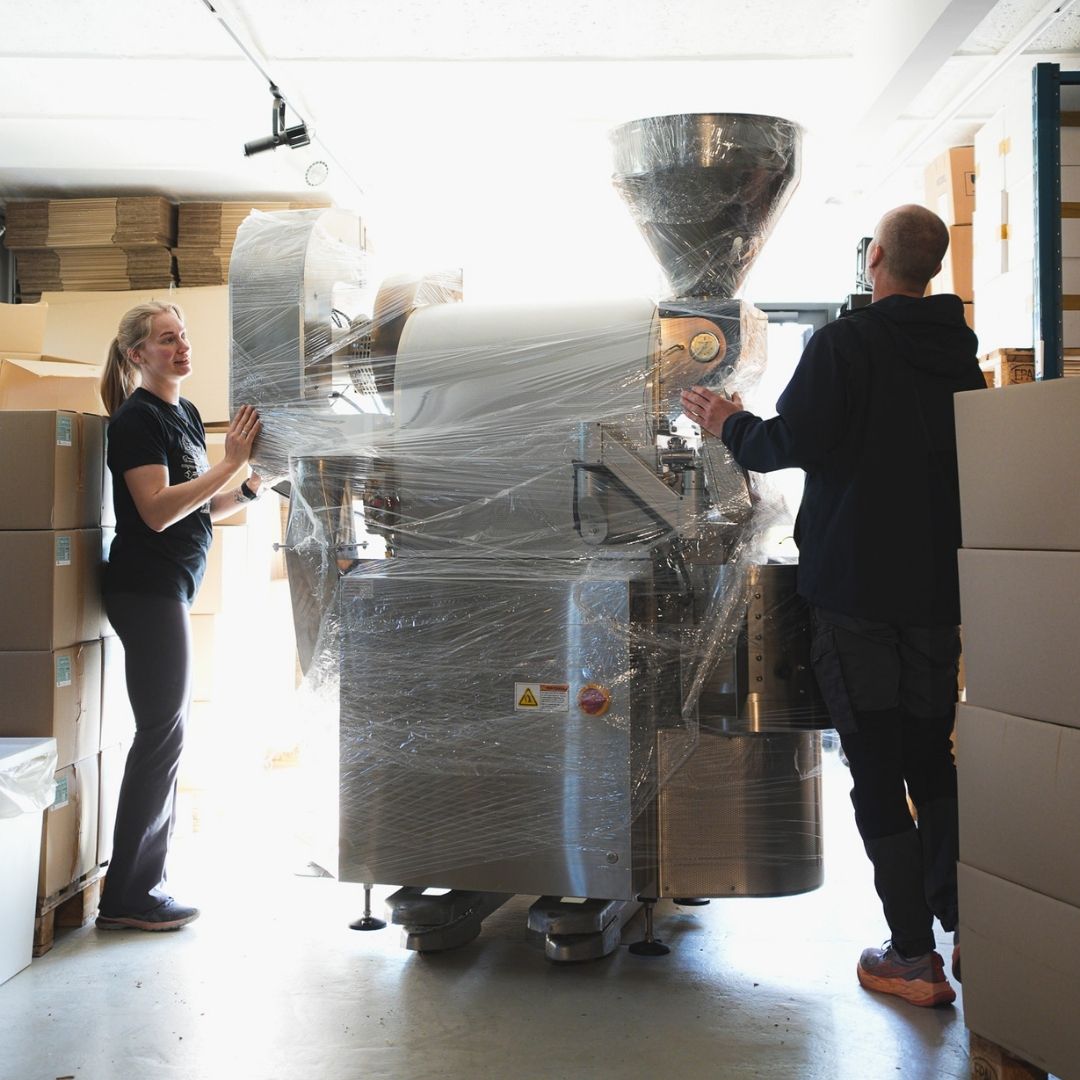
- The coffee was roasted and packaged at CleverCoffee in our own roastery outside Aarhus.
This coffee is grown in agroforestry
This roughly means that the coffee plants are shaded by other trees and plants. Agroforestry is the opposite of what is called “monoculture”, where you have a field that only consists of one type of plant, for example coffee plants.
In a forest farm, the coffee plants are part of a system with animals and plants that live naturally in the area.
There are many different types of agroforestry. There can be different amounts of shade cover, different degrees of diversity in plants and animals, and one can, for example, talk about having several different layers of shade cover, with trees that have their crowns at different heights and thus several layers.
Why agroforestry?
Since 1990, an estimated 420 million hectares of forest have been cleared and converted to agriculture, including coffee plantations. Although the rate of deforestation has slowed in recent decades, significant deforestation continues. About 10 million hectares of forest are cleared each year - an area the size of Iceland.
Therefore, we need to do something.
Forestry is a really good solution for both having food production and at the same time taking care of our ecosystems and climate.
Here are just some of the benefits of agroforestry:
- Increases biodiversity
- Absorbs much more CO2 from the atmosphere
- Minimizes the need for fertilizer
- Make coffee plants more resilient
- Extends the life of the coffee plant
- Gives the coffee a higher quality and better taste, as the coffee cherries take longer to ripen in the shade
- Better soil conditions
- Creates a microclimate that makes plants more resistant to climate change
Read more:
Taste the World
Coffee on Subscription
Get a new freshly roasted coffee delivered to your door every single month and get access to exclusive releases.