

77% better pay
Documented ✔
CleverCoffee
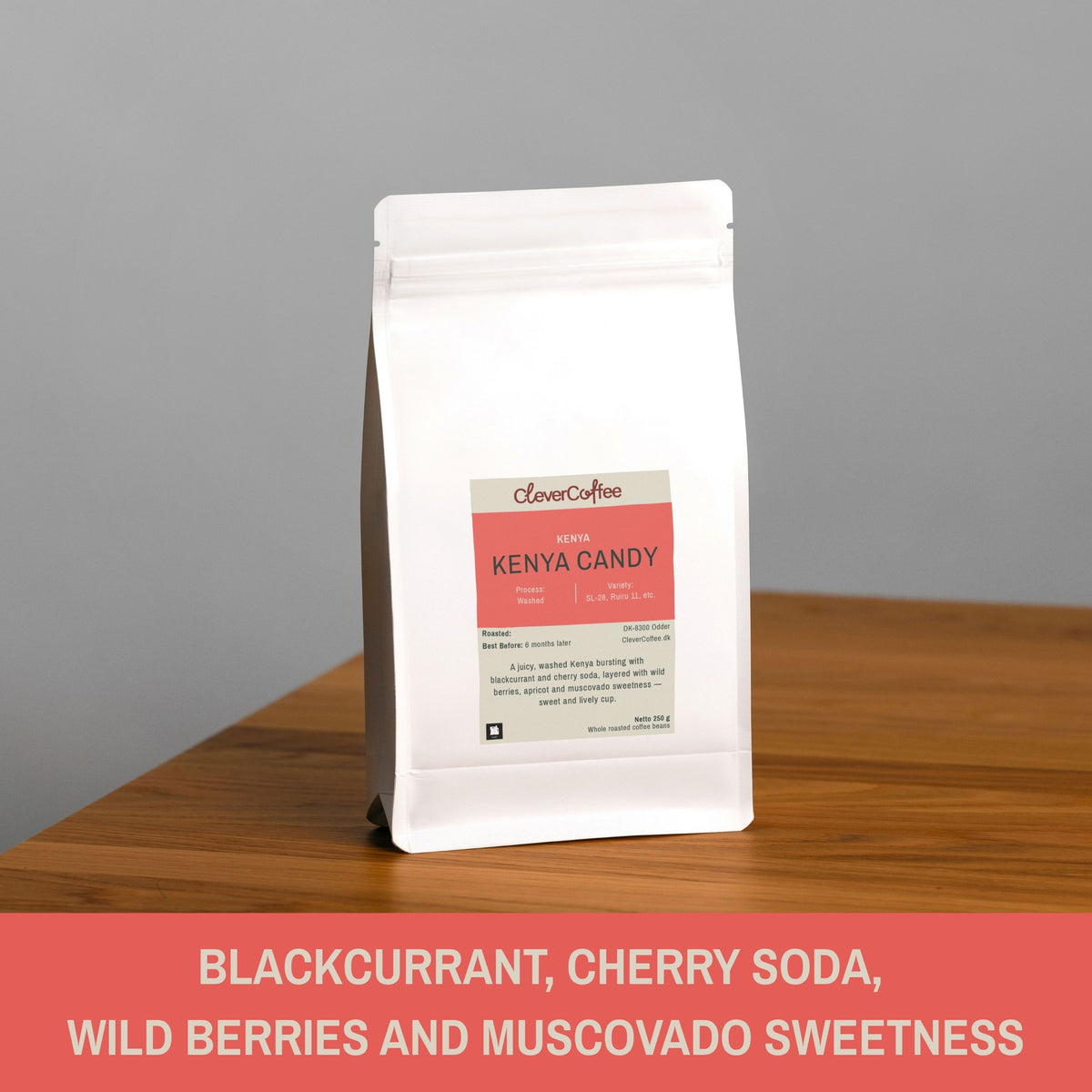
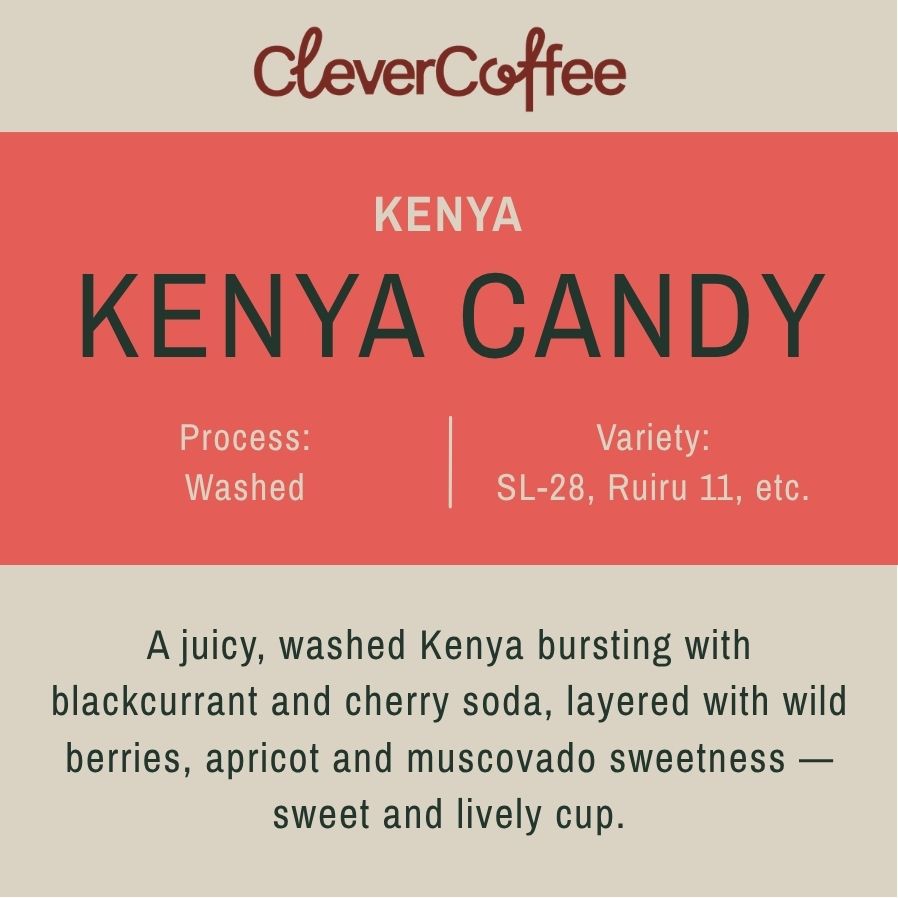
Kenya Candy
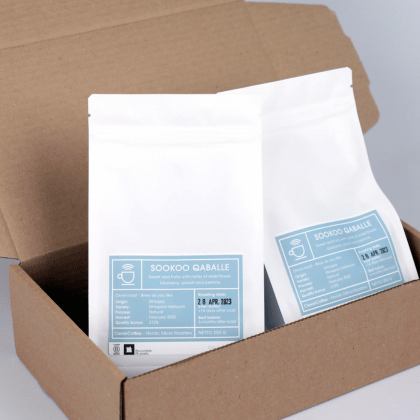
We have a wonderful Kenyan coffee back in stock.
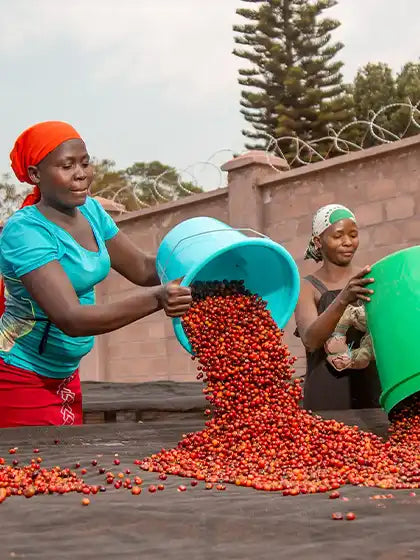
This coffee comes from Thiririka Farmers Cooperative Society in Kiambu, just north of Nairobi.
You can look forward to a sweet and fruity Kenyan coffee.
-
Origin: Kenya
-
Processing: Washed
-
Tasting notes: Blackcurrant and cherry soda with notes of fruity forest berries, apricot, and muscovado sugar
Omni-roasted coffee beans - brew any way you like
Title:250g
Quantity:
Typical delivery: 1-2 business days4.8 ★★★★★ on TrustpilotPay with MobilepayExceptionally Good Customer Service


Supply chain
Documented ✔

Agroforestry
Read more ✔
We paid the coffee farmer 77% more for this coffee
We pay the coffee farmer more for the coffee than the market price.
Research repeatedly shows that certifications such as Fairtrade and Rainforest Alliance have no provable positive effect on the living conditions of coffee farmers. (Cordes and Sagan, 2021)
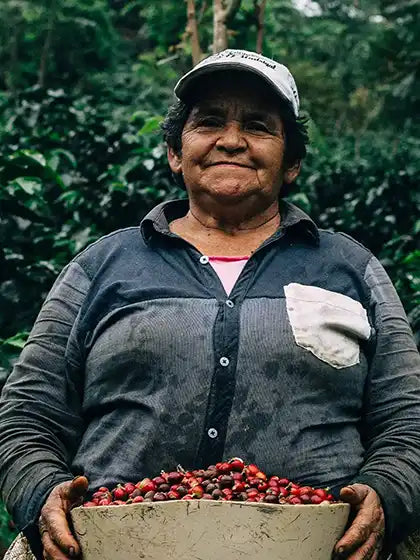
Western coffee companies make large sums of money, while coffee farmers worldwide live in poverty. That is wrong, and we must change it.
That is why we pay more for the coffee beans we import.
44% of coffee farmers worldwide still live in poverty. At least 5.5 million coffee farmers live below the international poverty line of $3.20 a day. Studies show that a third of coffee farmers earn less than $100 annually from coffee production (Enveritas, 2018; Sachs et al., 2019).
When we pay the farmers more, we give them the opportunity to invest in themselves and their businesses. This can lead to further growth and the ability to invest in more sustainable farming practices such as water consumption reduction and reforestation projects.
The calculation:
We paid the coffee farmer: $11.60/kg
The market price at the time of the contract was: $6.53/kg
Thus, we have paid the farmer 77% more than the market price
Documentation
See the complete overview of the payments we have made for our coffee beans in our annual transparency report: CleverCoffee: Transparency Report
Sources
"Responsible Coffee Sourcing: Towards a Living Income for Producers" (Cordes and Sagan, 2021)
"Why do coffee farmers stay poor? : Breaking vicious circles with direct payments from profit sharing" (Ruben, 2023)
"Six Transformations to Achieve the Sustainable Development Goals (SDGs)" (Sachs et al., 2019)
A short and transparent supply chain
We always work with a supply chain that is as short and transparent as possible. In 2025, 93.58% of our coffee was traded directly with the coffee farm, meaning without the use of a middleman.
This coffee is an exception, as we have used a transparent importer to bring the coffee in.
The vast majority of our roasted coffee is also purchased directly from us – with a few retailers as exceptions, such as coffee shops and specialty stores. You cannot buy our coffee in any large chains or on online marketplaces.
This means there are fewer parties that need to "have a slice of the pie," and we can provide better payment to the coffee farms, which have been underpaid and living in poverty for decades.
The supply chain for this coffee looks like this:
- The coffee is grown in Kenya in the Kiambu region
- The coffee cherries have been processed at the local Githembe washing station
- The green coffee beans have been imported by Nordic Approach and stored in a warehouse in Zeebrugge, Belgium
- After this, the green beans have been transported to CleverCoffee
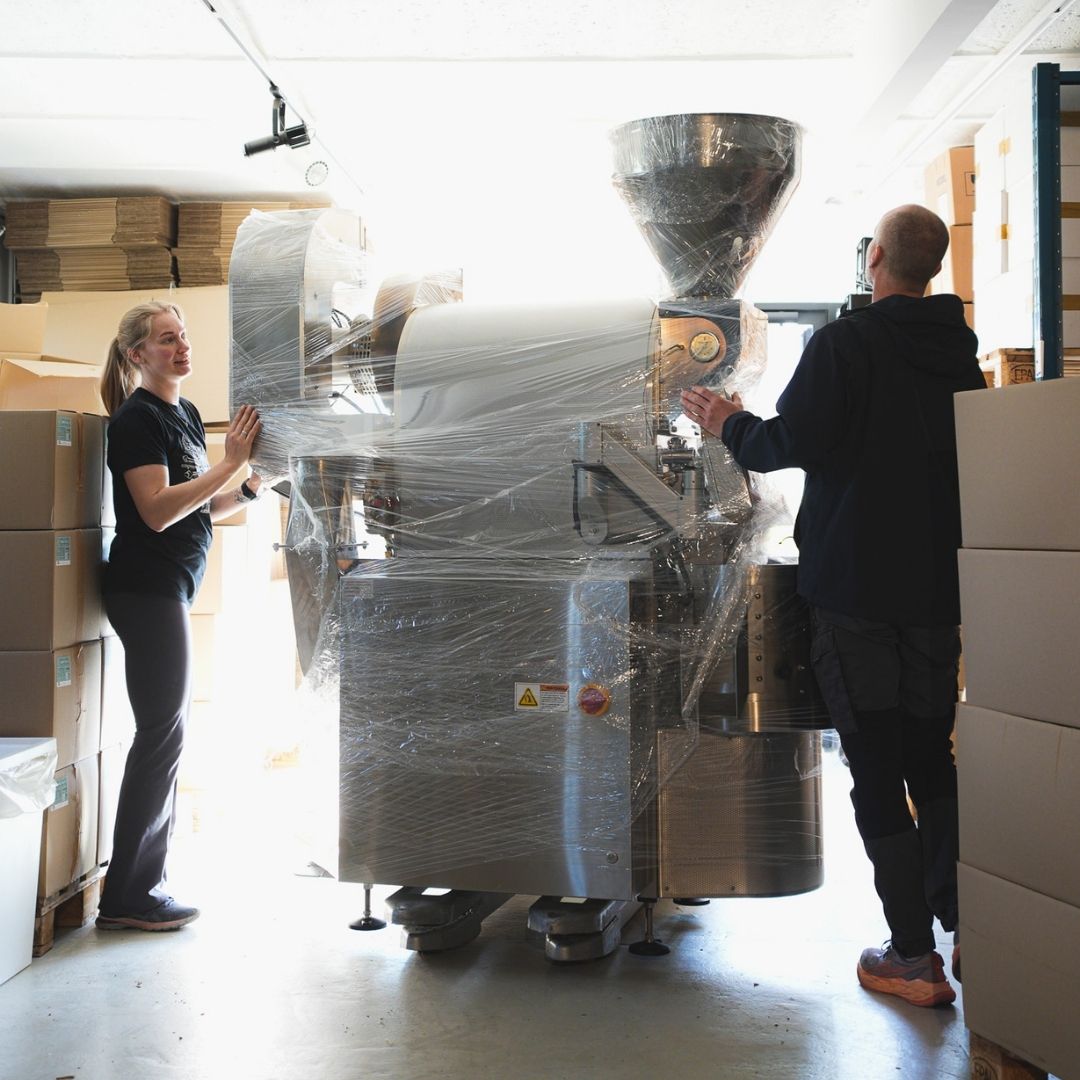
- The coffee is roasted and packed at CleverCoffee in our own roastery outside Aarhus
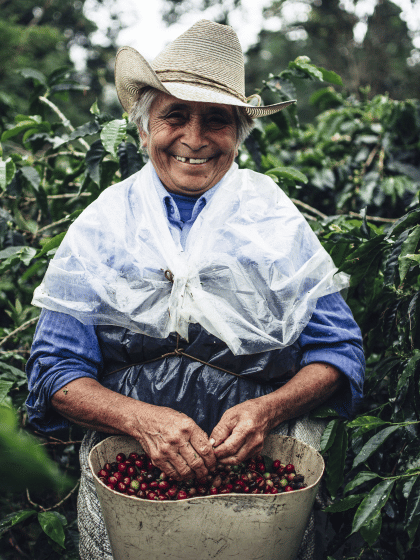
This coffee is grown in agroforestry
This roughly means that the coffee plants are shaded by other trees and plants. Agroforestry is the opposite of what is called “monoculture”, where you have a field that only consists of one type of plant, for example coffee plants.
In a forest farm, the coffee plants are part of a system with animals and plants that live naturally in the area.
There are many different types of agroforestry. There can be different amounts of shade cover, different degrees of diversity in plants and animals, and one can, for example, talk about having several different layers of shade cover, with trees that have their crowns at different heights and thus several layers.
Why agroforestry?
Since 1990, an estimated 420 million hectares of forest have been cleared and converted to agriculture, including coffee plantations. Although the rate of deforestation has slowed in recent decades, significant deforestation continues. About 10 million hectares of forest are cleared each year - an area the size of Iceland.
Therefore, we need to do something.
Forestry is a really good solution for both having food production and at the same time taking care of our ecosystems and climate.
Here are just some of the benefits of agroforestry:
- Increases biodiversity
- Absorbs much more CO2 from the atmosphere
- Minimizes the need for fertilizer
- Make coffee plants more resilient
- Extends the life of the coffee plant
- Gives the coffee a higher quality and better taste, as the coffee cherries take longer to ripen in the shade
- Better soil conditions
- Creates a microclimate that makes plants more resistant to climate change
Read more:
Taste the World
Coffee on Subscription
Get a new freshly roasted coffee delivered to your door every single month and get access to exclusive releases.