B Corp
Certified ✔
CleverCoffee
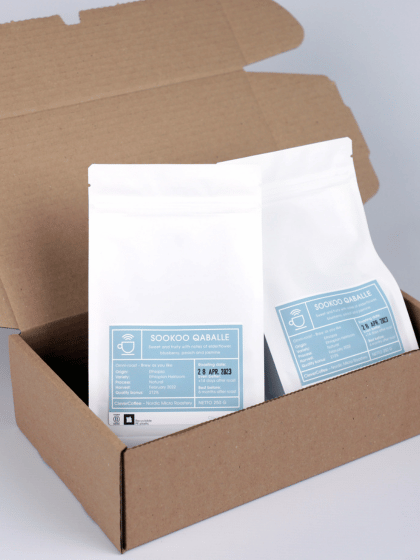
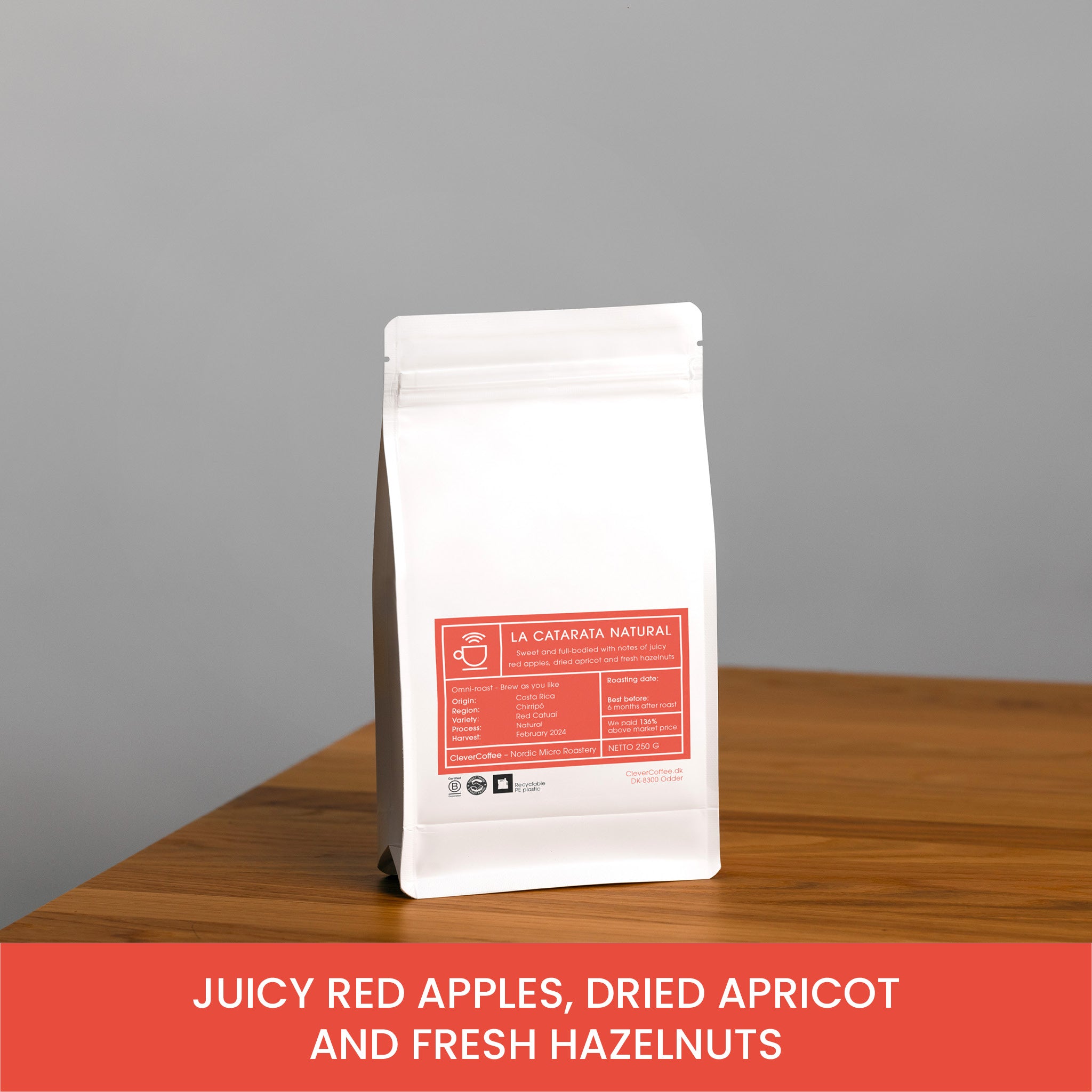
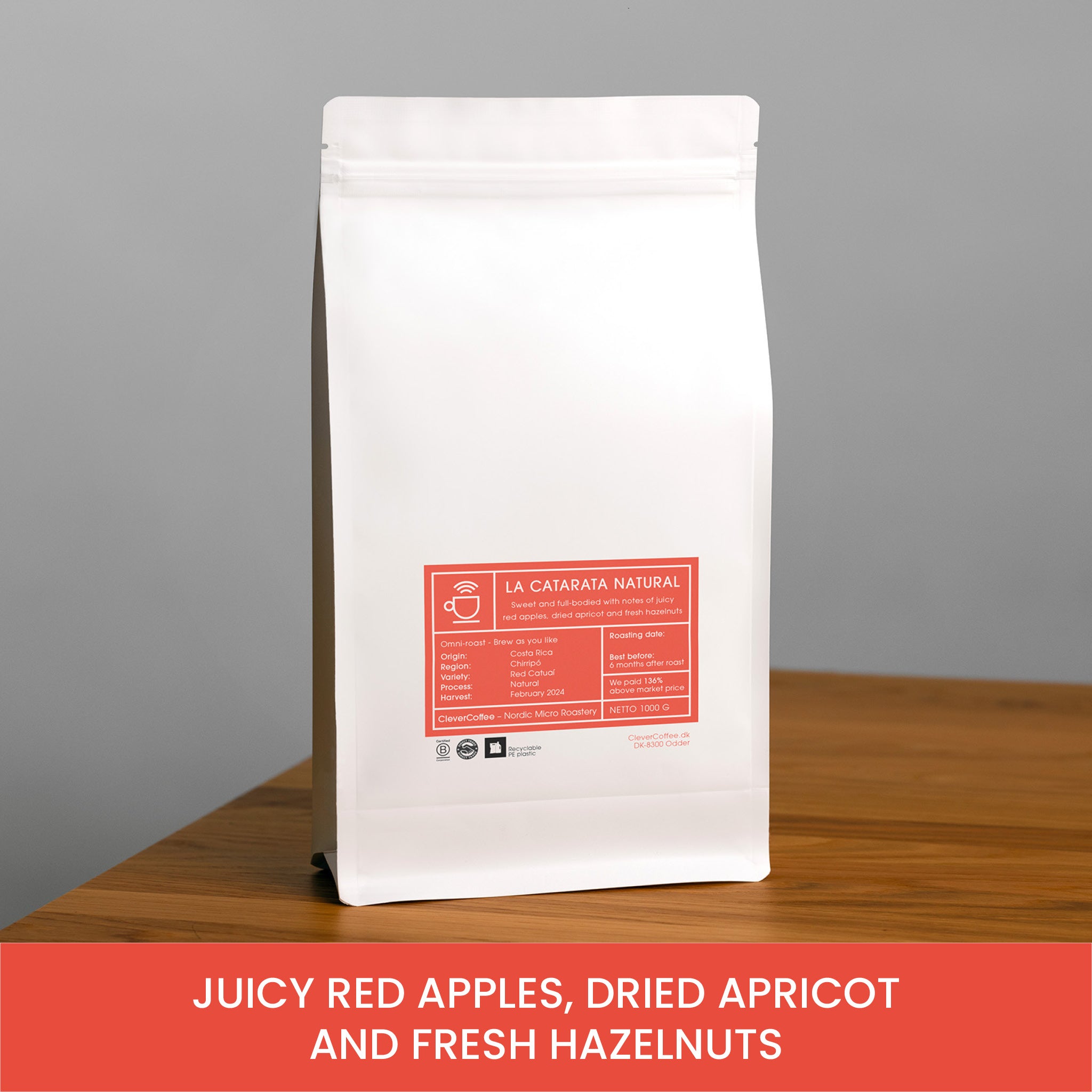
La Catarata Natural - Costa Rica
La Catarata, which has become somewhat of a trademark at CleverCoffee, now comes in a new variant. This time it is not a Black Honey - but a Natural!
- Origin: Chirripo, Costa Rica
- Variety: Red Catuaí
- Process: Natural
Omni-roasted coffee beans - brew any way you like
Title:250 g
Quantity:
Typical delivery: 1-2 business days4.9 ★★★★★ on TrustpilotPay with MobilepayExceptionally Good Customer Service
122% bedre betaling
Dokumenteret ✔
Forsyningskæde
Dokumenteret ✔
Direct Trade
Read more
Agroforestry
Read more ✔
CleverCoffee is a B Corp
The coffee you buy at CleverCoffee leaves a well-documented, positive imprint on the world.
When CleverCoffee became B Corp certified in 2021, it was with a score of 88.2.
In 2025 - four years later - we have almost doubled our score to 154.6 points.
This means that CleverCoffee has the highest score among all coffee companies in the EU - and the second highest score for all companies in the Nordic region.
In our opinion, B Corp certification is the world's most stringent independent certification, guaranteeing that you buy your coffee from a responsible company.
As a customer at CleverCoffee, you contribute to ensuring that coffee farmers can live a life above the poverty line and that they can afford to develop their farms so that they have a long-term source of income.
In addition to contributing positively to the living conditions of coffee farmers, CleverCoffee's B Corp certification is your assurance that we are always transparent and have a drastically reduced climate impact.
What was our score?
With our 2025 recertification we received the following score:
- Governance 19.5
- Workers 25.5
- Community 32.5
- Environment 73.4
- Customers 3.6
Total: 154.6
Documentation
Vi betalte kaffebonden 122% mere for denne kaffe
... til sammenligning har Fairtrade-certificeret kaffe typisk en merbetaling på mindre end 10% for bonden. Og certificeringen er heller ikke gratis.
Forskning viser gang på gang, at certificeringer som Fairtrade og Rainforest Alliance ikke har nogen beviselig positiv effekt på kaffebøndernes levevilkår. (Cordes og Sagan, 2021)
Vestlige kaffefirmaer tjener store summer, mens kaffebønder verden over lever i fattigdom. Det er forkert, og det skal vi ændre på.
Derfor betaler vi mere for de kaffebønner, vi importerer.
44% af kaffebønderne verden over lever fortsat i fattigdom. Mindst 5,5 millioner kaffebønder lever under den internationale fattigdomsgrænse på $3,20 om dagen. Undersøgelser viser, at en tredjedel af kaffebønderne tjener mindre end $100 årligt fra kaffeproduktion (Enveritas, 2018; Sachs et al., 2019).
Når vi betaler landmændene mere, giver vi dem mulighed for at investere i sig selv og deres virksomheder. Dette fører til yderligere vækst og muligheden for at investere i mere bæredygtige landbrugspraksisser som reduktion af vandforbrug og genskovningsprojekter.
Beregningen:
Vi betalte landmanden: 9,37 $/kg
Markedsprisen på tidspunktet for kontrakten var: 4,21 $/kg
Dermed har vi betalt landmanden 122% mere end markedsprisen
Dokumentation
Se den samlede oversigt over de betalinger vi har lavet for vores kaffebønner i vores årlige transparency report: CleverCoffee: Transparency Report
Kilder
"Responsible Coffee Sourcing: Towards a Living Income for Producers" (Cordes og Sagan, 2021)
"Why do coffee farmers stay poor? : Breaking vicious circles with direct payments from profit sharing" (Ruben, 2023)
"Six Transformations to Achieve the Sustainable Development Goals (SDGs)" (Sachs et al., 2019)
En kort og gennemskuelig forsyningskæde
Vi arbejder altid med så kort og gennemskuelig en forsyningskæde, som muligt. 98% af vores kaffe er handlet direkte hos kaffefarmen, altså uden at bruge en mellemmand.
Denne kaffe er en undtagelse, da vi har brugt en transparent importør til at få kaffen hjem.
Langt størstedelen af vores ristede kaffe bliver også købt direkte hos os - med nogle enkelte forhandlere som undtagelse, såsom kaffebarer og specialtetsforretninger. Man kan ikke købe vores kaffe i nogen store kæder eller på online markedspladser.
Dermed er der færre parter der skal “have en bid af kagen” og vi sikrer en bedre betaling for kaffefarmene, som i årtier har været underbetalt og levet i fattigdom.
Forsyningskæde for denne kaffe ser sådan ud:
- Kaffen er dyrket i Chirripó, Costa Rica
- Kaffebærrene er blevet processeret lokalt hos Café Rivense del Chirripó
- De grønne kaffebønner er importeret til Europa af Balck Coffee og kortvarigt opbevaret på et lager i Kalmar, Sverige
- Herefter er de grønne bønner blevet fragtet til CleverCoffee
- Kaffen er ristet og pakket hos CleverCoffee i vores eget risteri udenfor Aarhus
Direct Trade – No Middleman
We know our coffee farmers personally because we trade directly with them. This gives us a highly transparent value chain without unnecessary intermediaries.
It provides you with added assurance and brings you closer to the farm.
Direct trade means, among other things:
- More transparency
- More traceability
- Better payment to the coffee farmer
The vast majority of our coffee is purchased directly from the farmers. In 2024, 98% of our coffee was sourced through direct trade.
By cutting out the middleman, we know exactly where the money goes, ensuring that as much as possible ends up with the farmer — who has been underpaid for more than 40 years.
Direct trade allows us to better ensure quality and accountability at the source. At the same time, farmers gain access to valuable insights about the European market, new EU regulations, and more, through our partnership.
With direct trade, we achieve a much higher degree of transparency and traceability — something that’s crucial when it comes to documenting farming methods, working conditions, and whether a particular coffee has contributed to deforestation.
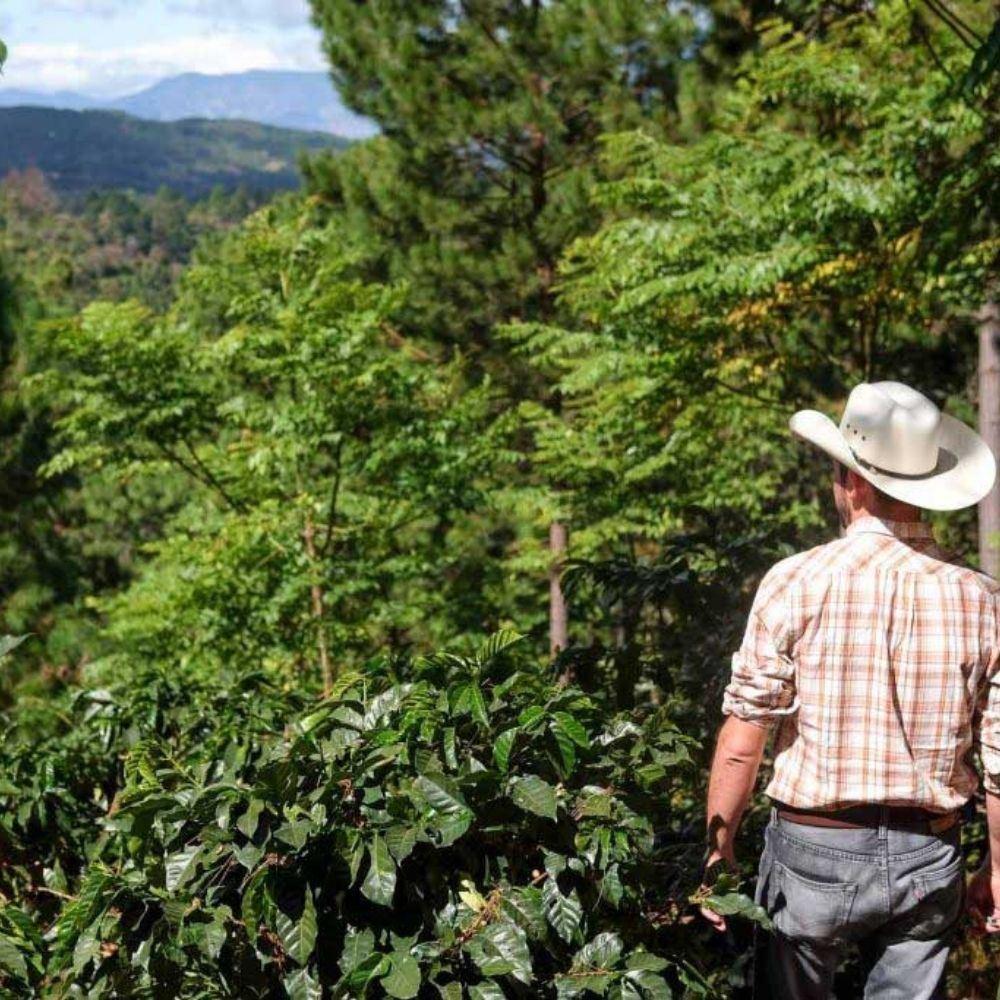
This coffee is grown in agroforestry
This roughly means that the coffee plants are shaded by other trees and plants. Agroforestry is the opposite of what is called “monoculture”, where you have a field that only consists of one type of plant, for example coffee plants.
In a forest farm, the coffee plants are part of a system with animals and plants that live naturally in the area.
There are many different types of agroforestry. There can be different amounts of shade cover, different degrees of diversity in plants and animals, and one can, for example, talk about having several different layers of shade cover, with trees that have their crowns at different heights and thus several layers.
Why agroforestry?
Since 1990, an estimated 420 million hectares of forest have been cleared and converted to agriculture, including coffee plantations. Although the rate of deforestation has slowed in recent decades, significant deforestation continues. About 10 million hectares of forest are cleared each year - an area the size of Iceland.
Therefore, we need to do something.
Forestry is a really good solution for both having food production and at the same time taking care of our ecosystems and climate.
Here are just some of the benefits of agroforestry:
- Increases biodiversity
- Absorbs much more CO2 from the atmosphere
- Minimizes the need for fertilizer
- Make coffee plants more resilient
- Extends the life of the coffee plant
- Gives the coffee a higher quality and better taste, as the coffee cherries take longer to ripen in the shade
- Better soil conditions
- Creates a microclimate that makes plants more resistant to climate change
Read more:
Taste the World
Coffee on Subscription
Get a new freshly roasted coffee delivered to your door every single month and get access to exclusive releases.